

A good inflatable paddle board can make water sports simple, portable, and beginner-friendly, but the way you set it up, use it, clean it, and store it can make every trip smoother and more enjoyable.
Best For
Beginners, weekend paddlers, families, travelers, yoga users, and anyone using an inflatable SUP for calm-water fun.
Main Focus
Inflation, deflation, seat setup, cleaning, storage, transport, safety, and simple board care habits.
Key Benefit
Better setup and care can help your board feel more stable, easier to use, and ready for more water adventures.
An inflatable paddle board is designed to make paddle boarding easier for everyday users. It is portable, practical, and beginner-friendly. You can pack it in a bag, take it on a weekend trip, inflate it near the water, paddle on a lake or calm bay, and store it away after the session.
Still, a good board needs the right setup and care. If you underinflate it, the board may feel less stable. If you store it while wet, it may develop odor or unnecessary wear. If you skip safety checks, your paddle session may feel less comfortable than it should.
The good news is that inflatable SUP care is simple once you know the basics. You do not need complicated tools or advanced skills. You only need a clear routine for inflation, accessory setup, cleaning, drying, deflation, and storage.
This guide explains how to set up and care for an inflatable paddle board, including how to use a paddle board with seat, how to protect your gear, and how to keep your board ready for lake days, beach trips, family outings, yoga sessions, and relaxed water adventures.
Quick Answer
To set up and care for an inflatable paddle board, choose a clean setup area, inflate the board to the recommended firmness, attach the fin and accessories, check safety gear, rinse the board after use, dry it fully, deflate it carefully, and store it in a cool, dry place.
Choose a Clean Setup Area
Before inflating your board, find a clean and open area near the water. Avoid sharp rocks, broken shells, rough pavement, thorns, or anything that could scratch or damage the board surface.
Grass, sand, a soft mat, or a clean dock area can work well. Keep your pump, paddle, fin, leash, seat, dry bag, and other accessories nearby so you do not have to search for them after the board is inflated.
Good Setup Spots
- Clean grass near a lake
- Smooth beach area away from sharp shells
- Open dock area with enough space
- Soft outdoor mat or towel under the board
- Flat ground away from heavy foot traffic
Inflate the Board Properly
Proper inflation is one of the most important parts of paddle board setup. A board that is not firm enough may feel less stable on the water. A properly inflated board should feel solid under your feet and ready for paddling.
Use the pump carefully and follow the recommended pressure guidance for your board. Do not rush the process. A few extra minutes of proper inflation can make your paddle session feel much better.
Manual Pump
A manual pump is simple, portable, and useful when you want a reliable setup option anywhere.
Electric Pump
An electric pump can save effort and make setup easier for frequent paddlers, families, and weekend travelers.
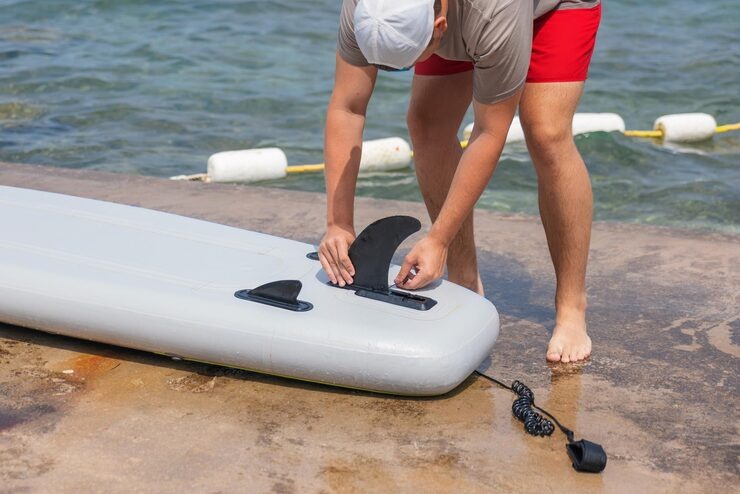
Attach the Fin Before Going Into the Water
The fin helps your inflatable paddle board track straighter on the water. Without it, the board may feel harder to control. Beginners especially benefit from a fin because it helps the board move more predictably.
Attach the fin before launching, and make sure it is secured properly. If the water is very shallow, carry the board carefully so the fin does not scrape along the bottom.
Why the Fin Matters
- It helps the board move straighter.
- It supports better control.
- It improves beginner confidence.
- It helps during relaxed lake and bay paddling.
- It makes the board feel smoother during forward strokes.
Set Up the Paddle Board With Seat Correctly
If you are using an inflatable paddle board with seat, set up the seat before launching. A paddle board with seat can make longer rides more comfortable, but it should be attached securely so it supports your seated position properly.
Most seat setups use board attachment points such as D-rings. Adjust the seat straps so the back support feels comfortable and balanced. Sit carefully the first time and make sure the seat does not shift too much while paddling.
Seat Setup Tips
- Attach the seat before entering the water.
- Use the proper attachment points.
- Adjust straps evenly on both sides.
- Check back support before paddling far from shore.
- Remove or adjust the seat if you need open deck space for yoga.
Check Your Safety Gear Before Launching
Safety gear should always be part of your paddle boarding routine. Even if the water looks calm, conditions can change. Wind, current, boat traffic, and fatigue can affect your session.
Use a personal flotation device and safety leash when appropriate. Bring water, sun protection, and a dry bag for essentials. Families should make sure every paddler has properly fitted safety gear.
Pre-Launch Safety Checklist
- Wear a personal flotation device.
- Check your safety leash.
- Review wind and weather conditions.
- Keep your phone and keys in a dry bag.
- Tell someone your paddling plan if going out longer.
- Stay close to shore when learning.
Use the Board Gently During Launch and Landing
Launching and landing are moments when boards can get scratched or bumped. Carry the board instead of dragging it over rough ground. If you are launching from shore, walk into enough water so the fin does not hit the bottom.
When returning, slow down before reaching shallow water. Step off carefully and lift the board when possible. These small habits can help protect the board over time.
Launch and Landing Tips
- Avoid dragging the board across rough ground.
- Carry the board by the handle when possible.
- Enter water deep enough for the fin.
- Step on carefully and stay centered.
- Lift the board out of water before packing.
Rinse the Board After Each Session
After paddling, rinse your inflatable paddle board with fresh water when possible. This is especially important after saltwater use because salt can dry on the surface and affect accessories over time.

A quick rinse helps remove sand, dirt, lake debris, and salt. You should also rinse the paddle, fin, seat, leash, and other accessories before storing them.
What to Rinse
- Board surface and deck pad
- Fin area
- Paddle
- Seat and straps
- Leash and attachment points
- Dry bag exterior and cooler if used
Dry the Board Before Storing
Drying is one of the simplest but most important care habits. If you pack your board while it is wet, moisture can lead to odor and make storage less pleasant. A dry board is easier to roll, pack, and use again next time.
Use a towel to remove water from the deck pad, valve area, fin box, and seat attachment points. Let the board air dry in a shaded area when possible before packing it away.
Drying Tips
- Wipe the board with a towel after rinsing.
- Let the board air dry before rolling.
- Dry the deck pad fully.
- Remove moisture around the valve and fin box.
- Dry the seat, paddle, leash, and accessories separately.
Deflate and Roll the Board Carefully
After the board is clean and dry, deflate it carefully. Open the valve according to the board instructions and let the air release. Keep your face away from the valve when releasing air because pressure can come out quickly.
Once most of the air is out, roll the board evenly. Avoid forcing tight folds in the same place every time. Remove the fin, seat, and loose accessories before rolling so the board packs smoothly.
Deflation Checklist
- Remove accessories first.
- Open the valve carefully.
- Let air release fully.
- Roll the board smoothly.
- Pack the board in its storage bag when dry.
Store Your Inflatable Paddle Board Properly
Proper storage helps keep your inflatable paddle board ready for future trips. Store it in a cool, dry place away from direct sunlight, sharp objects, heat sources, and heavy items that could press into the board for long periods.
If you use your board often, keep your accessories organized together. This makes it easier to grab your paddle, pump, leash, seat, dry bag, and safety gear when it is time for your next lake day or beach trip.
Storage Tips
- Store the board fully dry.
- Keep it away from sharp tools or rough surfaces.
- Avoid long exposure to direct sunlight when not in use.
- Do not place heavy objects on top of the packed board.
- Store accessories in one place so nothing gets lost.
Keep a Simple Care Routine After Every Trip
A simple care routine can save time and make your next trip easier. After every session, check the board, rinse it, dry it, remove accessories, and store everything together. This keeps your gear organized and ready to use.
After-Trip Routine
- Rinse the board and accessories.
- Dry everything fully.
- Check for dirt, sand, or debris around the valve and fin box.
- Remove and store the fin safely.
- Pack the seat, paddle, leash, and dry bag together.
- Store the board in a cool, dry place.
Final Thoughts
An inflatable paddle board is easy to enjoy when you take a few minutes to set it up and care for it properly. Good inflation, secure accessories, safety checks, cleaning, drying, and careful storage all help make your paddle boarding experience smoother.
Whether you use a regular inflatable paddle board or an inflatable paddle board with seat, simple care habits can help you feel more confident every time you head to the water. With the right routine, your board stays ready for lake days, family trips, yoga sessions, and relaxed outdoor adventures.
Frequently Asked Questions
1. How do I set up an inflatable paddle board?
Choose a clean setup area, inflate the board properly, attach the fin, adjust the paddle, check safety gear, and add accessories such as a seat or dry bag before launching.
2. Should I rinse my paddle board after every use?
Yes. Rinsing helps remove sand, dirt, lake debris, and saltwater. It is especially important after ocean or coastal paddling.
3. Can I use a paddle board with seat on calm water?
Yes. A paddle board with seat is useful on calm lakes, flat rivers, and quiet bays because it adds comfort and makes longer seated paddling easier.
4. How should I store an inflatable paddle board?
Store it clean and dry in a cool place away from sharp objects, heavy pressure, direct sunlight, and heat sources.
5. What accessories help with paddle board setup?
Helpful accessories include a pump, adjustable paddle, fin, safety leash, personal flotation device, waterproof dry bag, and inflatable seat for seated paddling.
Get Ready for Easier Paddle Board Adventures
Explore beginner-friendly inflatable paddle boards, paddle board seats, pumps, dry bags, and SUP accessories built for lakes, travel, family fun, yoga, and relaxed water sports.






Leave a Reply